This month’s newsletter is about Juvederm, a new wrinkle filler from the company that makes Botox. It will compete directly with Restylane, which is currently the most popular filler used in the United States.
What is Juvederm?
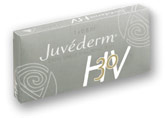 Juvederm (like Restylane) is a clear gel that is used to fill wrinkles. The gel is created in the laboratory (NOT from animals) and it is made of a natural substance called hyaluronic acid. Hyaluronic acid exists in your body. It lubricates your joints and is in your skin and eyes. The difference between the hyaluronic acid in Juvederm and that in your body is that Juvederm contains “cross-linked” hyaluronic acid. This makes it last longer. If natural hyaluronic acid was injected into a wrinkle, it would be absorbed by the body in a few weeks. Juvederm and Restylane last for 6 to 12 months.
Which lasts longer: Juvederm vs. Restylane?
This is the unanswered question. We know from experience that Restylane lasts an average of 7 or 8 months (and with some patients, a year or more). The makers of Juvederm “imply” that their product should last longer because it has a higher concentration of cross-linked hyaluronic acid (among other reasons), but no “head-to-head” studies have been performed.
Which is better: Juvederm vs. Restylane?
 Another “unanswered” question. We were one of the first offices to have Juvederm available (because we participated in the JET trial – a pre-launch clinical study of Juvederm) so we can share our experience with you. We feel that Juvederm is easier to inject. It seems “smoother” than Restylane. Patients who have tried both Restylane and Juvederm have told us that Juvederm feels more natural. However, Restylane is an outstanding product and has a proven track record and a huge following. Only time will tell which one is “better”.
What about Juvederm vs. Botox?
Juvederm and Botox are different types of wrinkle treatments. Botox is a “relaxer”. Juvederm (like Restylane) is a filler. As a general rule we use Botox for wrinkles on the upper half of the face and “fillers” for wrinkles on the lower half of the face (especially around the mouth). The reason for this is that expression muscles cause the wrinkles on the upper half of the face (for example, a frown line when you frown or “crow’s feet” when you squint). Botox relaxes these muscles and the wrinkles fade.
Wrinkles form on the lower half of the face due to loss of volume. Fillers like Juvederm and Restylane replace this lost volume and fill in the line or wrinkle. So to summarize: Juvederm and Restylane are both hyaluronic acid fillers (from different companies) that compete with each other for the treatment of wrinkles on the lower face. Botox is a relaxer that is used for totally different wrinkles (on the upper half of the face.)
In this issue
What is Juvederm?
Which lasts longer: Juvederm vs. Restylane?
What about Juvederm vs. Botox?